Thursday, August 15, 2013

It’s time to recognize the excellent health care delivered at federally qualified health centers

When we talk about high-quality health care, many people immediately think of world-class health centers, like Children’s Hospital of Philadelphia or Johns Hopkins Hospital.

But in our admiration for these cutting-edge medical centers, we shouldn’t forget about the excellent health care that is given in our communities every day at federally qualified health centers (FQHCs).  Since August 11-17 is National Health Center Week it’s a good time to give top-performing FQHCs the recognition they deserve. 

FQHCs are community-based health centers that provide primary care and preventive health care to economically or medically disadvantaged populations.  Health care professionals at FQHCs are specially trained to address the often complex needs of people living with chronic conditions and those with high-risk medical, behavioral or social challenges.

Despite the challenging circumstances facing many FQHCs, many of them go above and beyond to ensure that patients receive high quality, cost-efficient care.  UnitedHealthcare recognizes those health centers that ensure that care is accessible to the entire community and demonstrate excellence in providing high-quality, effective care in its Gold Star program.

This week, the United Health Foundation, a private, not-for-profit foundation, will recognize the superior clinical care and patient support that Gold Star FQHCs provide to our most vulnerable Americans.  In addition to recognition, the foundation will award grants to high-performing FQHCs across the nation, with more than 50 grants going to Pennsylvania health centers. In total, the foundation has committed nearly $40 million to community health centers since 2003. 

Here in Philadelphia, we have several FQHCs that demonstrate excellence in health care.  Among the many statewide FQHCs that we will recognize,  the city health centers operated by the Philadelphia Department of Public Health, a group of eight Federally Qualified Health Centers (FQHCs) is one that I want to shout out here for their commitment to providing access to quality health care for economically and medically disadvantaged Philadelphia area residents. 

I have deep respect for the work Federally Qualified Health Centers are doing to address the most pressing health concerns facing our communities, and I’m proud to support their efforts.  Keep up the good work!

Monday, August 5, 2013

Grateful for the chance to give back

Around Thanksgiving last year, many of you may remember that I talked about my team’s “Gratitude Challenge”

Even now in August, I’ve still been trying to keep up with the challenge.  This week, I found a lot to be grateful for, especially as I learned that Modern Healthcare magazine has chosen me as a finalist for its national Community Leadership Award.

I was excited and humbled to hear about the award, and it made me reflect on how grateful I am for the time I have been able to spend working on community projects.  It is truly been a privilege to work with the wonderful people who are dedicated to making our world a better place.

It also made me very grateful that the culture of volunteerism at UnitedHealthcare encourages community work, because I am not alone.  Many members of my team also devote their time to community projects, just as our fellow employees are doing nationwide.  In fact, 81% of our employees and 96% of our executives reported volunteering in 2012. 

And it helps to have the support of your employer.  Many of our employees find volunteer opportunities by working on UnitedHealthcare’s community initiatives, such as events related to our HEROES program, like the Moon Walk Challenge event at the Allegheny Valley YMCA or throwing a puppy shower for a kid in the Make-A-Wish program.

As I’ve gotten involved with my own volunteer projects, UnitedHealthcare has been supporting me every step of the way.  One project dear to my heart has been the annual UnitedHealthcare Dash to Make a Difference with the Susan G. Komen Race for the Cure.  I had been interested in doing an event to help young kids get involved in the fight against breast cancer ever since I had two friends, both with young children, call me in the same week to tell me they had breast cancer.  When I joined the board of directors at Komen, UnitedHealthcare was happy to support my idea for the Dash to Make a Difference.

UnitedHealthcare and my coworkers were also very supportive when I spoke about healthy pregnancies at the March of Dimes 75th Anniversary celebration earlier this year,  and when JDRF honored me at the annual Promise Ball in April to raise money for type 1 diabetes research.

So I’m feeling very grateful lately – grateful to have the opportunity to work with the wonderful people at  Susan G. Komen, March of Dimes, JDRF and others, grateful to work for a company that supports community involvement, and grateful to be honored as a finalist for the Community Leadership Award.

The public will have a chance to vote for the winner for the award.  Voting has already begun and will last until September 20th.  If any of you would be so kind as to take a moment and send a vote my way by clicking here, I’d be – you guessed it – grateful!

Monday, July 22, 2013

One way to modernize our health care system…change how we pay

Paying a fee for a service is typically how we pay.  Many of us pay to have our hair cut and colored, our cars washed or repaired, and even when our time is crunched, we pay for our bi-weekly “mani-pedi.”  And it makes sense to pay a fee for each of these services.

But it doesn’t make sense in health care.

Most medical care is currently paid for using the fee-for-service model: each time someone visits a physician or undergoes a test, the insurance company or individual is billed.  But the flaw in fee-for-service payments for health care is that medical professionals are not paid for the best outcome – a healthy patient – but for individual services performed. 

“Physicians have increasingly decided that the current fee-for-service model is not sustainable in the long term, but they want payment models that are more customized to meet their specific needs,” said Ruth Benton, CEO of Denver-based New West Physicians. “One size certainly doesn’t fit all, and UnitedHealthcare has worked with us closely to create a model that provides financial incentives and infrastructure support for delivering evidence-based high-quality care.”

Yes, UnitedHealthcare is moving away from contracts that reward the volume of care and replacing them with contracts that reward the value of care.

Currently, more than $20 billion of our reimbursements to hospitals, physicians and ancillary care providers are paid through contracts that link a portion of the reimbursement to quality and cost-efficiency measures.  But as you may have heard in the news recently, we are planning to more than double that number to $50 billion by 2017 as more care providers join the transition to accountable care contracts that reward quality and value-based health care.

UnitedHealthcare’s accountable care strategy, which includes three categories of programs, focuses on achieving the triple aim to improve population health outcomes, patient experience, and reduce medical costs. Early results show promising trends in improving evidence-based care and quality outcomes while reducing costs.  All programs are showing promising results:

Performance-based Programs have demonstrated improved quality and cost-efficiency outcomes such as a 14% reduction in the use of non-Tier 1 prescriptions and a 25% reduction in the use of out-of-network laboratory services.

The transplant Centers of Excellence program has demonstrated a 25% reduction in average length of hospital stays for transplant patients, a 16% reduction in transplants due to applying evidence-based care approaches and improved transplant survival rates at Centers of Excellence.

Accountable Care Programs have proven results that demonstrate improved health outcomes, such as a 4 to 4.5% reduction in medical cost trend, a 16% reduction in emergency room visits and a 17% reduction in inpatient days, in addition to clinical quality results trending above program targets on 95 percent of all measures

Changing the way we pay our physicians and health centers doesn’t mean we value them any less,  it just means we want to pay them more for the value of care they provide.

For more information about how UnitedHealthcare is modernizing our health care system by helping to transform the way health care is delivered, paid for and rewarded, visit www.AccountableCareAnswers.com.

Monday, July 1, 2013

Don’t forget about your eye health this summer

Slather on sunscreen. Drink lots of water. Spray on bug repellent. Wear a wide brim hat.

There’s a lot we can do to protect our health before heading out for Fourth of July picnics or other fun summer activities.  But, according to our summer savvy regional medical director, Dr. Phil Benditt, one area of health many of us neglect to protect in the summer is our eye health.

So, I asked Dr. Phil to tell me more…

According to Dr. Phil, the same ultraviolet radiation that causes sun burns can also cause serious eye damage.  Both long-wave UVA rays and short-wave UVB rays are known to contribute to the development of cataracts and macular degeneration, which can result in blindness.

Many people may not be aware that intense short-term exposure to ultraviolet light can cause “eye sunburn,” a painful condition associated with long hours of outdoor recreational activity.  Long-term exposure to ultraviolet radiation can also lead to skin cancer around the eyes.

Sunglasses and a wide-brim had can protect your eyes from the sun.  Ideally, sunglasses should block out 99 percent or more of both UVA and UVB radiation.

For those who prefer a cool indoor movie theater to the heat outside, Dr. Phil says 3-D movies are also an opportunity to check up on your eye health.  The American Optometry Association’s (AOA) report, “3D in the Classroom” states that 3-D movies have the potential to help identify vision problems that may otherwise go unnoticed.  After watching a 3-D movie, if you or a family member experience blurred vision, dizziness, discomfort, double vision, or eye fatigue, schedule a visit with your eye doctor.  According to the AOA report, about one in four children might have vision problems that may be detected with 3-D viewing.

So, whatever eye wear you are sporting this weekend – sunglasses or 3-D – have a safe and happy Fourth of July holiday!

Dr. Health E. Hound sporting his favorite eye wear
 

Monday, June 24, 2013

Navigating health insurance after graduation: Advice for the Class of 2013

The big news in the Schick family earlier this month…my son’s graduation from Randolph-Macon College in Ashland, VA – my alma mater! The commencement was beautiful and the speaker, Katie Couric, bestowed her wisdom and life advice on the graduates, and got me thinking about advice in general.


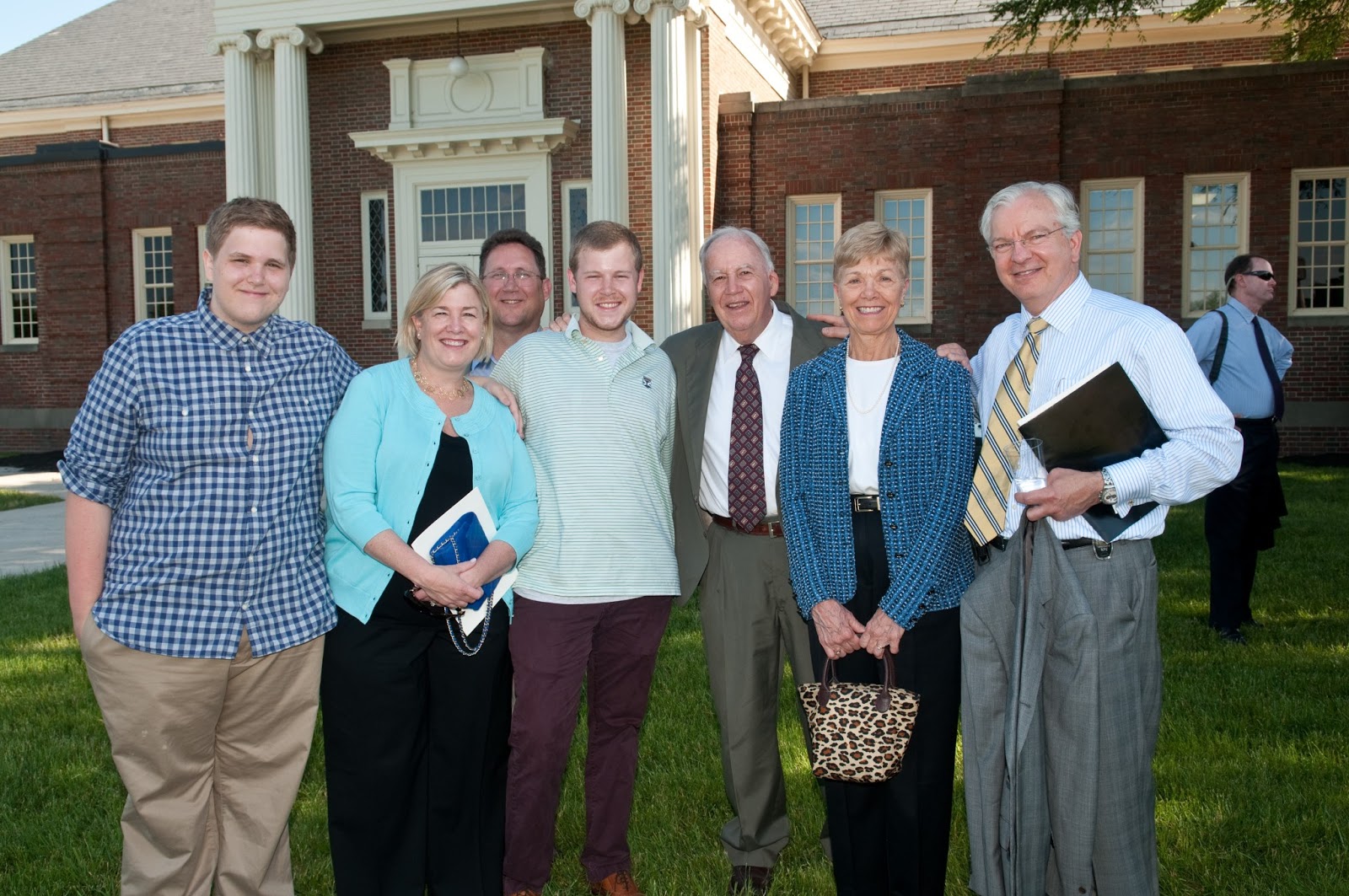
The Schick family with the president of Randolph-Macon College, Robert Lindgren
I had the opportunity to spend a few minutes with the commencement speaker, Katie Couric

One piece of advice that recent college grads must consider has to do with health insurance.  Some lucky graduates have jobs lined up with health benefits.  God bless ’em.  My son is not one of the lucky few.  So as he begins his search, he, like many others, may have to stay on our family health plan until he lands a job.

But many grads may go uninsured.  In fact, the U.S. Census measures that nearly three in ten people age 19 to 35 are uninsured, the highest proportion among all groups.

Statistically speaking, people in the 19-35 age group are typically fairly healthy. But nobody is free from the risk of being in an accident or developing a disease, and it’s important that young adults make smart decisions to protect their future health and finances.

So, here’s my advice:
  •  Don’t risk going uninsured. If you are eligible, consider staying on your parents’ health insurance plan until you turn 26.  Buying your own individual coverage, however, may actually be more affordable, so be sure to compare the cost.
  •  If you decide to buy your own coverage, make sure to include all health costs when determining how much you can afford, including monthly premiums and any out-of-pocket costs for health care services and prescriptions.
  •  Ask questions. Solicit parents’ and family members’ advice, check out reputable insurance company websites or visit with a local independent insurance broker to learn the basics about health insurance.
  • Consider a high deductible health plan. For many young, healthy people, high deductible plans make sense because they provide quality coverage at lower premium rates.
  • Consider short term health insurance plans that can offer you temporary coverage for the remainder of 2013. Be sure to find a plan that lets you drop your coverage without penalty if you find a job with employer-sponsored health insurance benefits in the meantime.
  • Do your homework.  Check out this video for more information http://www.youtube.com/watch?v=QalUZsnkPDc
While you may or may not follow my advice on this one, when I asked my UHC team about the power of really good advice, an interesting theme emerged; most people, even young people, are inspired by advice that calls them to action, pushes them to get results and move forward without regrets. 


My husband and son (front left) walk with other parents and students as students prepare to receive their degree.
 
My son, Andy, says the job market is really tough. But, he has a final interview this week so he may have a full-time gig soon…can you say “proud Mom”?

Congratulations class of 2013!


Friday, June 14, 2013

Defined contribution health plans come to companies with 51-99 employees

The hottest thing in health insurance—the defined contribution plan—is now available to organizations with 51-99 employees in Pennsylvania and other states across the country.

Last year UnitedHealthcare was the first health insurer to begin offering defined contribution health plans to Pennsylvania employers with 50 or fewer employees. Effective June 1st, we expanded our offering to include Pennsylvania groups with 51-99 employees.

The plan, called Multi-Choice, includes access to UnitedHealthcare’s strong national and local provider network which consists of over 33,000 providers, over 200 hospitals across the state of Pennsylvania and all hospitals in Western Pennsylvania including the University of Pittsburgh Medical Center facilities and West Penn Allegheny Health System. The newly expanded plan also includes additional broker distribution and the ability to add specialty benefits, such as dental, life and vision, to standard health plans.

With defined contribution health care, the employer gives employees a defined amount for the health benefit and a menu of many health care plans from which to choose. Depending on the plan selected, the employee will pay more or less of a premium. Many health insurers are going to the defined contribution model, because it gives employees more choice without raising the cost to employer.

The flexibility of this plan design makes offering health insurance more cost-effective and financially predictable. It also gives small businesses parity with their larger competitors when it comes to this important employee benefit, something they’ve never had before. In a defined contribution world, it’s easy for people to address the specific health needs of their family.

I’ve said it before, and I’ll say it over and over again, now more than ever, everyone involved in the health care industry has a vested interest in making our health care system simpler and smarter – allowing for a better patient experience, delivering the best possible outcome and reducing the overall costs of care. An innovative product like Multi-Choice is just one of the many ways we at UnitedHealthcare are doing our part.


Monday, June 10, 2013

Cycling clinic, kickboxing, cultural dancing – we did it all at our South Philly office


We Philadelphians love our bicycles.

In fact, a study from the Bicycle Coalition of Greater Philadelphia shows that Philadelphia has twice as many bicycle commuters per capita than any other big city in the U.S., and the number continues to grow.

At UnitedHealthcare, we love our bikes, too. We even sponsor a pro cycling team that competes worldwide. In fact, our team was in town for the Philly Cycling Classic on June 2nd and took time from their training schedule to conduct a cycling clinic for over 40 kids at our South Philly office.

Pro cyclists Jeff Louder and Danny Summerhill talked about how to eat, train and ride like a professional cyclist. The program was geared toward students from the World Communications Charter School, but contained great health and fitness education for the whole community. Both Jeff and Danny made it clear that you don’t have to aspire to be a professional to enjoy cycling, and everyone can see the benefits of good nutrition and regular exercise in their daily lives.

During the clinic, UnitedHealthcare and the cycling team were also proud to donate $1,000 to the Philadelphia Chinatown Development Corporation to purchase a stationary bike for community use.

UnitedHealthcare and their pro cycling team donated $1,000 to the Philadelphia Chinatown Development Corporation to invest in a stationary bicycle.  Left to right: UnitedHealthcare’s Angelica Cuellar Hardin; pro cyclist Jeff Louder; Lisa Wright; pro cyclist Danny Summerhill; and John W. Chin, executive director, Philadelphia Chinatown Development Corporation.

The cycling clinic was held at our retail office in South Philadelphia, which we opened last year to better serve the community on a face-to-face basis. The office offers information and assistance to anyone who wants to learn more about their health care options, and provides special service to the unique health care needs of people of diverse cultural backgrounds, including those that do not speak English.

The clinic coincided with the one-year anniversary celebration of the office opening. In addition to the cycling clinic, the day was filled with fitness activities like kickboxing, zumba and line dancing, as well as cultural performances, such as hip-hop dancing, salsa dancing by George Dennis of Mambodelphia, and the Rejang and Randa Nabia Indonesian dances. Families also enjoyed fun activities such as face painting and Wii console gaming.

UnitedHealthcare mascot Health E. Hound cheered on dancers from a youth hip hop dance group.


After a great day of fitness tips and multicultural celebration, we had further reason to celebrate on Sunday when a member of UnitedHealthcare’s pro cycling team, Kiel Reijnen, won the Philly Cycling Classic. Kiel finished the 120-mile race in only 4 hours, 35 minutes, and 34 seconds. I’m very proud of Kiel and the entire UnitedHealthcare cycling team for such a great win in my hometown!