Monday, July 22, 2013

One way to modernize our health care system…change how we pay

Paying a fee for a service is typically how we pay.  Many of us pay to have our hair cut and colored, our cars washed or repaired, and even when our time is crunched, we pay for our bi-weekly “mani-pedi.”  And it makes sense to pay a fee for each of these services.

But it doesn’t make sense in health care.

Most medical care is currently paid for using the fee-for-service model: each time someone visits a physician or undergoes a test, the insurance company or individual is billed.  But the flaw in fee-for-service payments for health care is that medical professionals are not paid for the best outcome – a healthy patient – but for individual services performed. 

“Physicians have increasingly decided that the current fee-for-service model is not sustainable in the long term, but they want payment models that are more customized to meet their specific needs,” said Ruth Benton, CEO of Denver-based New West Physicians. “One size certainly doesn’t fit all, and UnitedHealthcare has worked with us closely to create a model that provides financial incentives and infrastructure support for delivering evidence-based high-quality care.”

Yes, UnitedHealthcare is moving away from contracts that reward the volume of care and replacing them with contracts that reward the value of care.

Currently, more than $20 billion of our reimbursements to hospitals, physicians and ancillary care providers are paid through contracts that link a portion of the reimbursement to quality and cost-efficiency measures.  But as you may have heard in the news recently, we are planning to more than double that number to $50 billion by 2017 as more care providers join the transition to accountable care contracts that reward quality and value-based health care.

UnitedHealthcare’s accountable care strategy, which includes three categories of programs, focuses on achieving the triple aim to improve population health outcomes, patient experience, and reduce medical costs. Early results show promising trends in improving evidence-based care and quality outcomes while reducing costs.  All programs are showing promising results:

Performance-based Programs have demonstrated improved quality and cost-efficiency outcomes such as a 14% reduction in the use of non-Tier 1 prescriptions and a 25% reduction in the use of out-of-network laboratory services.

The transplant Centers of Excellence program has demonstrated a 25% reduction in average length of hospital stays for transplant patients, a 16% reduction in transplants due to applying evidence-based care approaches and improved transplant survival rates at Centers of Excellence.

Accountable Care Programs have proven results that demonstrate improved health outcomes, such as a 4 to 4.5% reduction in medical cost trend, a 16% reduction in emergency room visits and a 17% reduction in inpatient days, in addition to clinical quality results trending above program targets on 95 percent of all measures

Changing the way we pay our physicians and health centers doesn’t mean we value them any less,  it just means we want to pay them more for the value of care they provide.

For more information about how UnitedHealthcare is modernizing our health care system by helping to transform the way health care is delivered, paid for and rewarded, visit www.AccountableCareAnswers.com.

Monday, July 1, 2013

Don’t forget about your eye health this summer

Slather on sunscreen. Drink lots of water. Spray on bug repellent. Wear a wide brim hat.

There’s a lot we can do to protect our health before heading out for Fourth of July picnics or other fun summer activities.  But, according to our summer savvy regional medical director, Dr. Phil Benditt, one area of health many of us neglect to protect in the summer is our eye health.

So, I asked Dr. Phil to tell me more…

According to Dr. Phil, the same ultraviolet radiation that causes sun burns can also cause serious eye damage.  Both long-wave UVA rays and short-wave UVB rays are known to contribute to the development of cataracts and macular degeneration, which can result in blindness.

Many people may not be aware that intense short-term exposure to ultraviolet light can cause “eye sunburn,” a painful condition associated with long hours of outdoor recreational activity.  Long-term exposure to ultraviolet radiation can also lead to skin cancer around the eyes.

Sunglasses and a wide-brim had can protect your eyes from the sun.  Ideally, sunglasses should block out 99 percent or more of both UVA and UVB radiation.

For those who prefer a cool indoor movie theater to the heat outside, Dr. Phil says 3-D movies are also an opportunity to check up on your eye health.  The American Optometry Association’s (AOA) report, “3D in the Classroom” states that 3-D movies have the potential to help identify vision problems that may otherwise go unnoticed.  After watching a 3-D movie, if you or a family member experience blurred vision, dizziness, discomfort, double vision, or eye fatigue, schedule a visit with your eye doctor.  According to the AOA report, about one in four children might have vision problems that may be detected with 3-D viewing.

So, whatever eye wear you are sporting this weekend – sunglasses or 3-D – have a safe and happy Fourth of July holiday!

Dr. Health E. Hound sporting his favorite eye wear
 

Monday, June 24, 2013

Navigating health insurance after graduation: Advice for the Class of 2013

The big news in the Schick family earlier this month…my son’s graduation from Randolph-Macon College in Ashland, VA – my alma mater! The commencement was beautiful and the speaker, Katie Couric, bestowed her wisdom and life advice on the graduates, and got me thinking about advice in general.


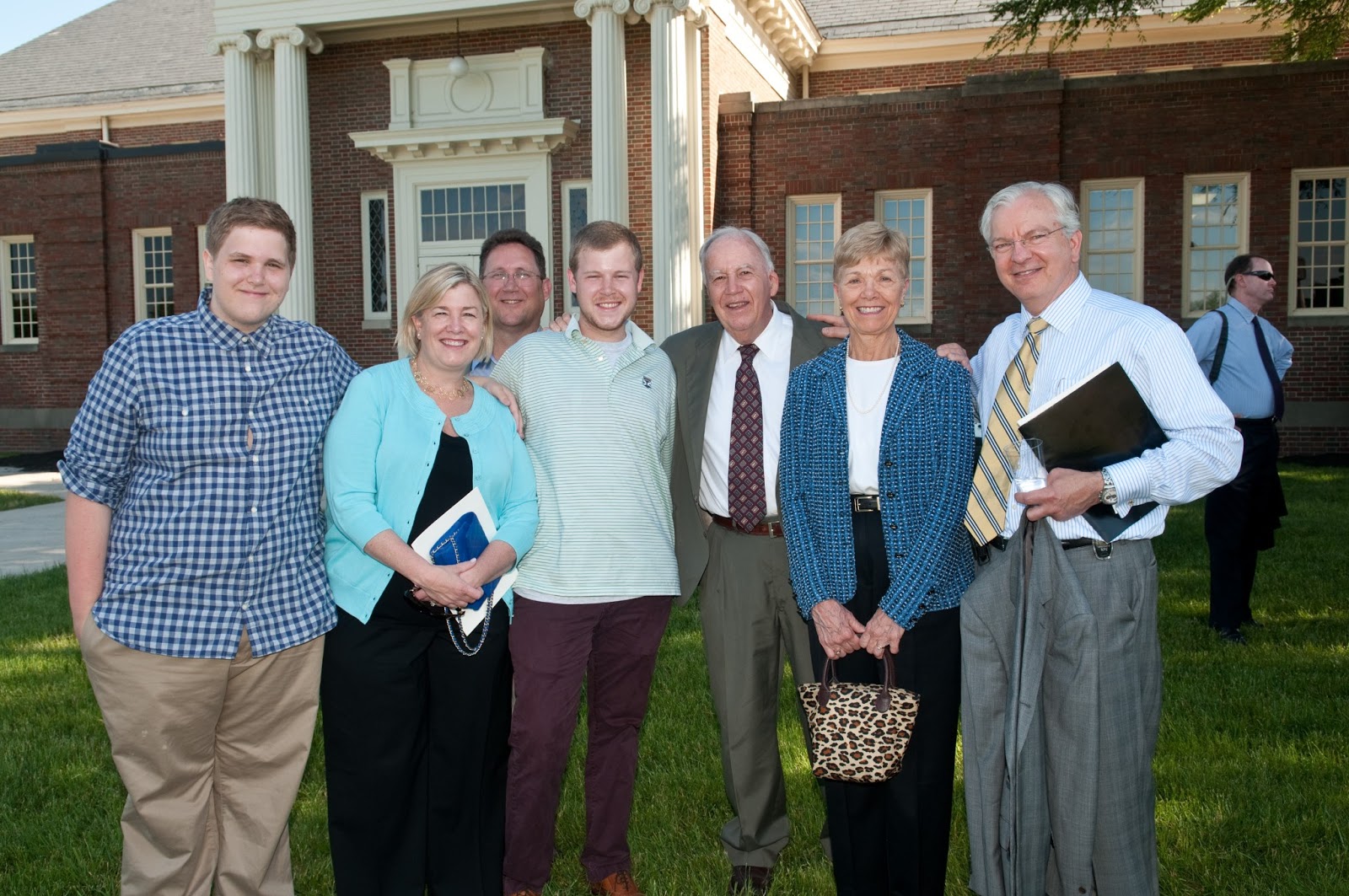
The Schick family with the president of Randolph-Macon College, Robert Lindgren
I had the opportunity to spend a few minutes with the commencement speaker, Katie Couric

One piece of advice that recent college grads must consider has to do with health insurance.  Some lucky graduates have jobs lined up with health benefits.  God bless ’em.  My son is not one of the lucky few.  So as he begins his search, he, like many others, may have to stay on our family health plan until he lands a job.

But many grads may go uninsured.  In fact, the U.S. Census measures that nearly three in ten people age 19 to 35 are uninsured, the highest proportion among all groups.

Statistically speaking, people in the 19-35 age group are typically fairly healthy. But nobody is free from the risk of being in an accident or developing a disease, and it’s important that young adults make smart decisions to protect their future health and finances.

So, here’s my advice:
  •  Don’t risk going uninsured. If you are eligible, consider staying on your parents’ health insurance plan until you turn 26.  Buying your own individual coverage, however, may actually be more affordable, so be sure to compare the cost.
  •  If you decide to buy your own coverage, make sure to include all health costs when determining how much you can afford, including monthly premiums and any out-of-pocket costs for health care services and prescriptions.
  •  Ask questions. Solicit parents’ and family members’ advice, check out reputable insurance company websites or visit with a local independent insurance broker to learn the basics about health insurance.
  • Consider a high deductible health plan. For many young, healthy people, high deductible plans make sense because they provide quality coverage at lower premium rates.
  • Consider short term health insurance plans that can offer you temporary coverage for the remainder of 2013. Be sure to find a plan that lets you drop your coverage without penalty if you find a job with employer-sponsored health insurance benefits in the meantime.
  • Do your homework.  Check out this video for more information http://www.youtube.com/watch?v=QalUZsnkPDc
While you may or may not follow my advice on this one, when I asked my UHC team about the power of really good advice, an interesting theme emerged; most people, even young people, are inspired by advice that calls them to action, pushes them to get results and move forward without regrets. 


My husband and son (front left) walk with other parents and students as students prepare to receive their degree.
 
My son, Andy, says the job market is really tough. But, he has a final interview this week so he may have a full-time gig soon…can you say “proud Mom”?

Congratulations class of 2013!


Friday, June 14, 2013

Defined contribution health plans come to companies with 51-99 employees

The hottest thing in health insurance—the defined contribution plan—is now available to organizations with 51-99 employees in Pennsylvania and other states across the country.

Last year UnitedHealthcare was the first health insurer to begin offering defined contribution health plans to Pennsylvania employers with 50 or fewer employees. Effective June 1st, we expanded our offering to include Pennsylvania groups with 51-99 employees.

The plan, called Multi-Choice, includes access to UnitedHealthcare’s strong national and local provider network which consists of over 33,000 providers, over 200 hospitals across the state of Pennsylvania and all hospitals in Western Pennsylvania including the University of Pittsburgh Medical Center facilities and West Penn Allegheny Health System. The newly expanded plan also includes additional broker distribution and the ability to add specialty benefits, such as dental, life and vision, to standard health plans.

With defined contribution health care, the employer gives employees a defined amount for the health benefit and a menu of many health care plans from which to choose. Depending on the plan selected, the employee will pay more or less of a premium. Many health insurers are going to the defined contribution model, because it gives employees more choice without raising the cost to employer.

The flexibility of this plan design makes offering health insurance more cost-effective and financially predictable. It also gives small businesses parity with their larger competitors when it comes to this important employee benefit, something they’ve never had before. In a defined contribution world, it’s easy for people to address the specific health needs of their family.

I’ve said it before, and I’ll say it over and over again, now more than ever, everyone involved in the health care industry has a vested interest in making our health care system simpler and smarter – allowing for a better patient experience, delivering the best possible outcome and reducing the overall costs of care. An innovative product like Multi-Choice is just one of the many ways we at UnitedHealthcare are doing our part.


Monday, June 10, 2013

Cycling clinic, kickboxing, cultural dancing – we did it all at our South Philly office


We Philadelphians love our bicycles.

In fact, a study from the Bicycle Coalition of Greater Philadelphia shows that Philadelphia has twice as many bicycle commuters per capita than any other big city in the U.S., and the number continues to grow.

At UnitedHealthcare, we love our bikes, too. We even sponsor a pro cycling team that competes worldwide. In fact, our team was in town for the Philly Cycling Classic on June 2nd and took time from their training schedule to conduct a cycling clinic for over 40 kids at our South Philly office.

Pro cyclists Jeff Louder and Danny Summerhill talked about how to eat, train and ride like a professional cyclist. The program was geared toward students from the World Communications Charter School, but contained great health and fitness education for the whole community. Both Jeff and Danny made it clear that you don’t have to aspire to be a professional to enjoy cycling, and everyone can see the benefits of good nutrition and regular exercise in their daily lives.

During the clinic, UnitedHealthcare and the cycling team were also proud to donate $1,000 to the Philadelphia Chinatown Development Corporation to purchase a stationary bike for community use.

UnitedHealthcare and their pro cycling team donated $1,000 to the Philadelphia Chinatown Development Corporation to invest in a stationary bicycle.  Left to right: UnitedHealthcare’s Angelica Cuellar Hardin; pro cyclist Jeff Louder; Lisa Wright; pro cyclist Danny Summerhill; and John W. Chin, executive director, Philadelphia Chinatown Development Corporation.

The cycling clinic was held at our retail office in South Philadelphia, which we opened last year to better serve the community on a face-to-face basis. The office offers information and assistance to anyone who wants to learn more about their health care options, and provides special service to the unique health care needs of people of diverse cultural backgrounds, including those that do not speak English.

The clinic coincided with the one-year anniversary celebration of the office opening. In addition to the cycling clinic, the day was filled with fitness activities like kickboxing, zumba and line dancing, as well as cultural performances, such as hip-hop dancing, salsa dancing by George Dennis of Mambodelphia, and the Rejang and Randa Nabia Indonesian dances. Families also enjoyed fun activities such as face painting and Wii console gaming.

UnitedHealthcare mascot Health E. Hound cheered on dancers from a youth hip hop dance group.


After a great day of fitness tips and multicultural celebration, we had further reason to celebrate on Sunday when a member of UnitedHealthcare’s pro cycling team, Kiel Reijnen, won the Philly Cycling Classic. Kiel finished the 120-mile race in only 4 hours, 35 minutes, and 34 seconds. I’m very proud of Kiel and the entire UnitedHealthcare cycling team for such a great win in my hometown!


Friday, May 31, 2013

Philadelphia employers make employee wellness fun

If you peek in the offices at Fox Rothschild during lunch, you might see people doing yoga or participating in Salad Bowl Wednesday, when the office supplies the greens, and employees bring in favorite toppings.

At American Heritage Federal Credit Union, employees might think twice about what’s in their lunch box if they’re competing against their coworkers to win the “Losers R Winners” competition.

And those employees eating at their desks at Bentley Systems won’t suffer the ill effects of prolonged sitting, thanks to flexible new sit-stand desks.

These are just some of the innovative initiatives Philadelphia companies have taken to keep their employees healthy.  In partnership with the Philadelphia Business Journal, UnitedHealthcare invited employers, large and small, to tell us about their wellness initiatives.  We received over seventy nominations for the Healthiest Employer Award and we learned a lot about the healthiest employers in Philadelphia.

As it turns out, almost all of the companies advocating workplace wellness have a few things in common.  The companies that focus on wellness have healthier employees, increased productivity, reduced costs and a healthier bottom line. Most of the wellness programs these companies use are based on sound principles.

Senior level support and involvement was critical to helping employees understand that wellness was a high priority in the organization’s strategic plan.  Executives tried to  create a culture of wellness with such activities and programs as promoting stair use, encouraging a smoke-free workplace and making vending machine snacks healthier.

Smaller companies stressing workplace wellness tend to have a wellness coordinator, while larger companies put a committee in charge of wellness.

The healthiest employers in Philadelphia are also among the smartest.  They used data from health assessments, claim reports and employee surveys to help identify and understand the needs of their employees.  Then they created a wellness program that best augmented their existing benefits package.

Finally, and here’s where the fun began, they came up with innovative programs that generated excitement about wellness in the workplace.  But don’t take my word for it, go to  http://www.bizjournals.com/philadelphia/feature/healthiest-employers-2013.html and check out these Philadelphia companies who are making the health of their employees a top priority.  It doesn’t get much healthier than that!

Friday, May 17, 2013

$5,000 Grants Help Children Get the Care they Need

Four-year-old Alexander could hear the sounds. He could see the way the lips of others moved and he understood everything he needed to do to say the words. But his mouth and tongue didn’t seem to work and no one could understand what he said. It was frustrating for this happy and sociable pre-schooler, and even more frustrating for his parents who were running out of money to pay for the therapy he needed.

It’s called Apraxia of speech, and the special speech therapy needed to help Alexander and other children with this physical disability to overcome it is usually not covered by health insurance.

Luckily, Alexander’s mom, found out about the UnitedHealthcare Children’s Foundation (UHCCF) from a friend she saw at a business conference. Alexander's mom applied for and was awarded a grant.

Alexander’s grant paid for intensive speech therapy sessions with a licensed speech therapist.  Alexander improved rapidly and his mom reports that she now understands nearly 50 percent of what he says, whereas it used to be only about 20 percent.

UHCCF awards grants of up to $5,000 to families nationwide to help pay the cost of their children’s health care treatments, medical services and equipment not covered or fully covered by their commercial health insurance such as physical, occupational and speech therapy, counseling services, surgeries, prescriptions, wheelchairs, orthotics, eyeglasses and hearing aids. UHCCF grants are available throughout the year for families with children aged 16 and under.

 To be eligible for a grant, your child must be 16 years of age or younger. In addition your family must meet economic guidelines; you must reside in the United States and have a commercial health insurance plan. Grants are available for medical expenses you have incurred for your child 60 days prior to the date of application as well as for ongoing and future medical needs. A parent or legal guardian may apply for grants at www.uhccf.org, and there is no application deadline.

In 2012, UHCCF awarded more than 1,300 grants, worth more than $4.1 million, to families across the United States for treatments associated with medical conditions such as cancer, spina bifida, muscular dystrophy, diabetes, hearing loss, autism, cystic fibrosis, Down syndrome, ADHD and cerebral palsy. Parents or legal guardians may apply for grants at www.uhccf.org